
Doing the Work: Women in San Diego’s GLAM Community, featuring Katie Ruiz — San Diego ART Matters
The following interview with Katie Ruiz appeared in San Diego ART Matters’ April 1, 2026 newsletter and is republished here with permission.
This month, Doing the Work highlights women working across San Diego’s GLAM community — galleries, libraries, archives, and museums. These are the professionals who steward collections, shape public memory, design exhibitions, build programs, and ensure that culture remains accessible and alive.
Through a shared set of questions, each woman reflects on the work that drives her, the challenges shaping her field, and the responsibility of carrying stories forward. Together, their voices offer a glimpse into the labor — visible and invisible — that sustains San Diego’s cultural landscape.
This week, join us as San Diego ART Matters Deputy Director Felicia Shaw highlights the fascinating life and work of Katie Ruiz, the Visual Arts Program Coordinator at Space 4 Art.
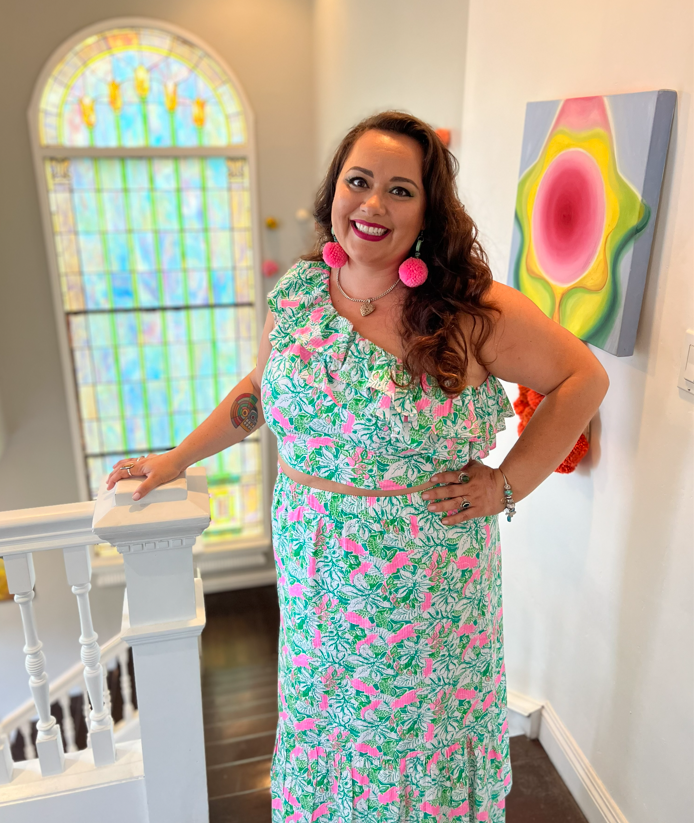
Doing the Work
Women in San Diego's GLAM Community
Katie Ruiz
Visual Arts Program Coordinator, Space 4 Art
One evening in North Park, a poetry workshop at Art Produce turned unexpectedly intimate.
Poet Adolfo Guzman-Lopez invited participants to write about parents who had been domestic workers — about migration, memory, and labor.
“It’s easy to feel alone,” he told the group. “But it’s in these rooms together where the real action happens.”
By the end of the night, people were crying. Writing about their mothers. Their fathers. Their crossings. Their sacrifices.
Katie Ruiz hadn’t planned to write.
“I ended up writing a poem about my dad,” she says.
“If you had told me that something that powerful could happen in a gallery space with a group of strangers, I wouldn't have believed you.”
But that’s exactly why she does this work.
“The events. The exhibits. The workshops,” she says. “That’s where real community happens. That’s where we’re building something together.”
For Ruiz, galleries are not just rooms for looking at art. They are rooms for becoming something — together.
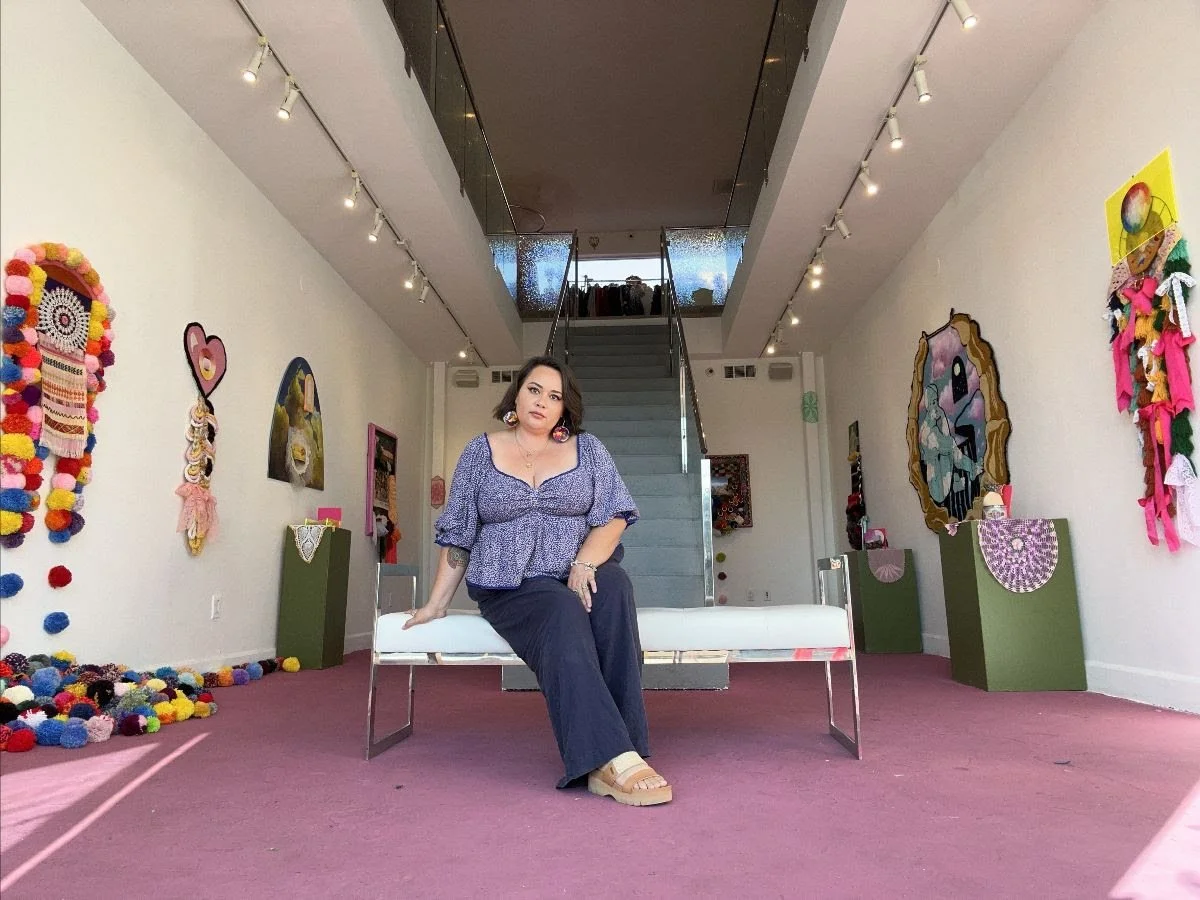
Building Spaces That Work
As Visual Art Program Coordinator for Space 4 Art — currently operating out of Art Produce — Ruiz oversees exhibitions, organizes workshops, and keeps the programming calendar alive year-round.
The structure is collaborative and adaptive. Space 4 Art partners with organizations like ICA San Diego and The Front, while Art Produce provides a physical anchor — a place where programming can unfold consistently.
Access is central to the mission.
“Our workshops are free,” Ruiz says. “That matters. A lot of art classes cost hundreds of dollars. Not everyone can afford that. Here, everyone is welcome.”
Craftivism workshops. Poetry gatherings. Artist talks. Skill-building sessions.
People come to learn something practical — but they often leave with something deeper.
“They come to make something,” she says. “But they also meet people. They start talking. And then they come back.”
That return — those recurring faces — tells her the space is working.
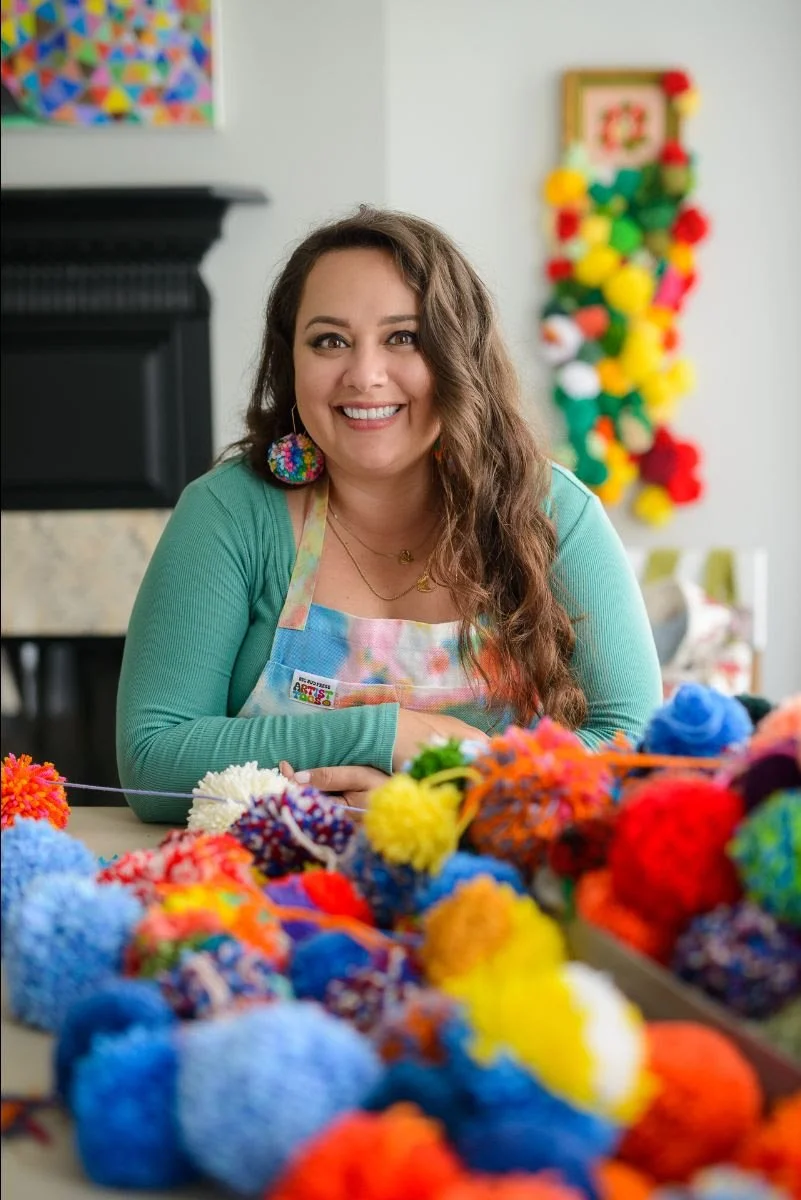
Learning the Room
Ruiz didn’t set out to run galleries.
After earning her MFA in New York, she returned to San Diego intending to focus on her own art practice. But she quickly realized that if she wanted to understand the region’s art ecosystem, she needed to participate in shaping it.
So she opened a small gallery in Little Italy in 2017.
“That was my way of learning the community,” she says. “I didn’t know the art world here yet.”
Curating became her way in. One exhibition led to another. One project led to invitations.
“It’s reciprocal,” she says. “You build something well, and people invite you to do it again.”
At the Women’s Museum of California, she refined that instinct — developing exhibitions focused on craftivism, where handmade work becomes a vehicle for activism and collective voice.
Now, managing programming for Space 4 Art while coordinating exhibitions at Art Produce, she has found what she calls her sweet spot.
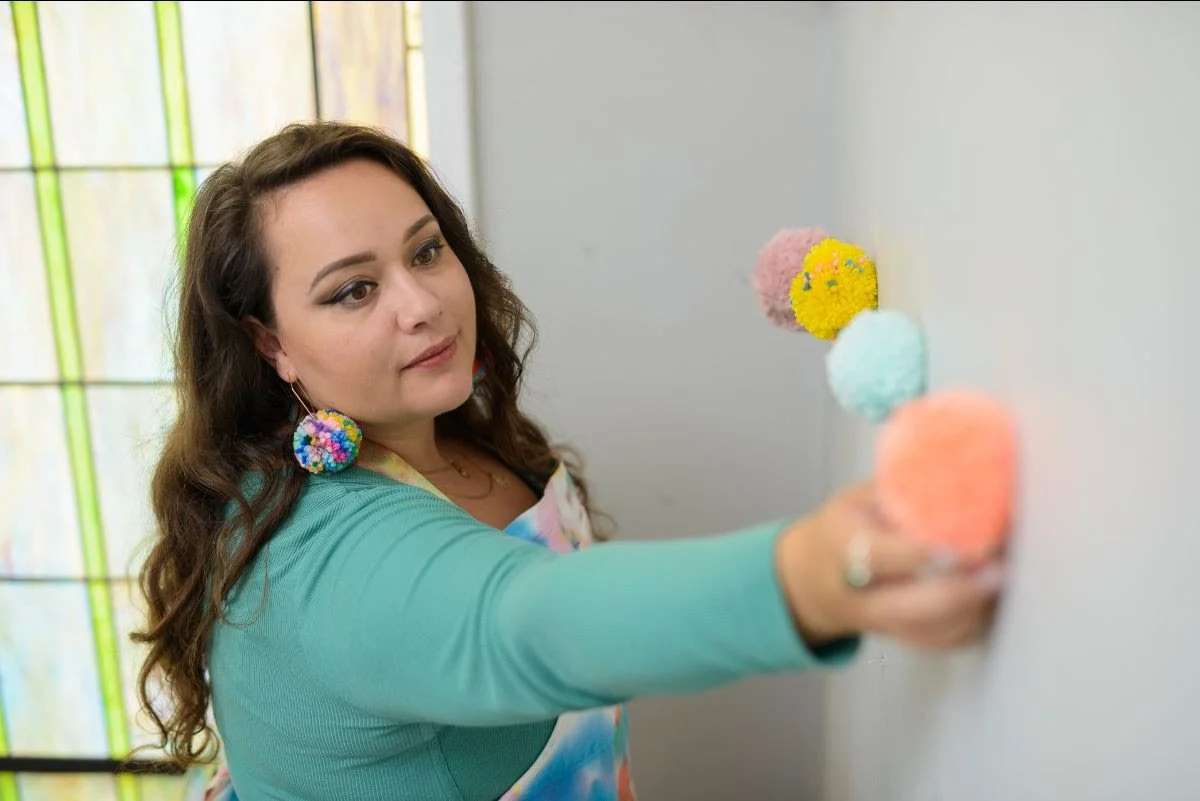
“I like the whole process,” she says. “Not just choosing the art — but building the walls, hanging the work, installing the vinyl, adjusting the lights.”
She doesn’t just curate ideas. She builds environments.
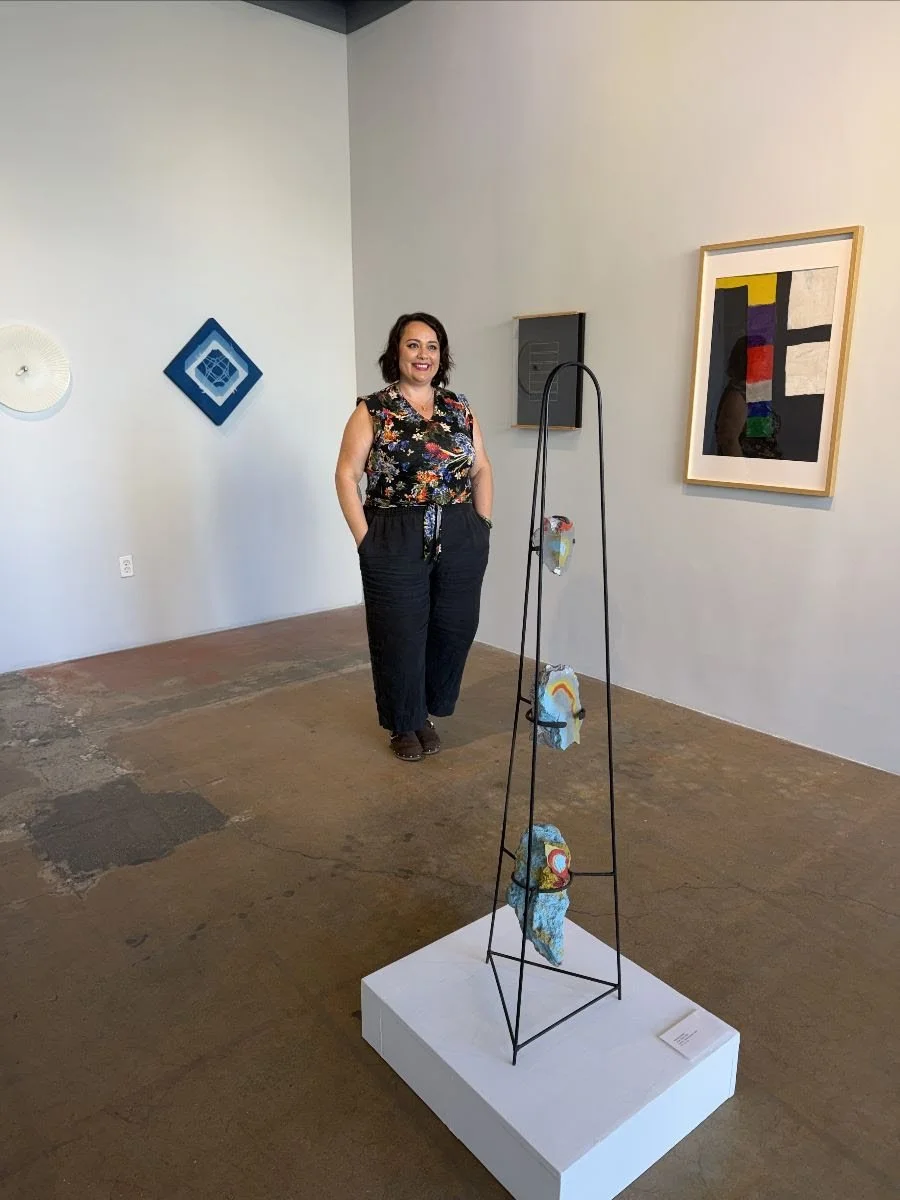
Demystifying the Work
Ruiz is particularly passionate about the physical side of gallery work — the part rarely discussed in artist talks.
“Everyone wants to curate,” she says. “But what about preparing the space?”
She recalls giving a woman her first solo exhibition and discovering the artist had never been taught how to measure and hang work herself.
“She told me, 'I've always had a man help me.' And I said, 'Not this time.'”
In half an hour, Ruiz walked her through the tape measure, the level, the math.
“By the end, she hung the entire show herself. And she felt empowered.”
Preparator work — installing walls, adjusting lighting, using power tools — has long been treated as technical, specialized, even masculine.
“It’s been gate-kept,” Ruiz says. “Men show up with the power tools and suddenly they’re indispensable.”
But the hammer doesn’t care who holds it.
“Women shouldn’t feel intimidated by tools,” she says. “It’s only intimidating the first time.”
For Ruiz, demystifying the mechanics of exhibition-making is part of equity work.
“Demystify the tools,” she says. “That’s part of the job.”
Care Without Branding
In the independent curatorial world, Ruiz notices a pattern: women are often the ones organizing, planning, shaping the exhibitions — even if ownership looks different on paper.
“Even when spaces are technically owned by a man,” she says, “it’s often a woman who curated the room.”
At Space 4 Art and Art Produce, she is surrounded by women in leadership. But she is careful not to frame that as ideology.
“It’s not about feminism as branding,” she says. “It’s about care.”
Care shows up in how artists are supported. In how space is prepared. In how opportunities are extended.
It shows up in the small, unglamorous labor that makes exhibitions possible.
Paying it Forward
Today, thanks to grant funding, Ruiz finds herself in a new position — the one offering the opportunity.
“Someone once asked me, ‘Do you want to teach a workshop?’” she says. “Now I get to be the person asking.”
She makes sure artists are paid. That their work is valued.
“You get a check,” she says, smiling. “And you get to add that experience to your résumé.”
She also notices who shows up.
The volunteers. The helpers. The ones who lean in.
“When something comes up, I think of them,” she says. “That’s how we build community.”
For Ruiz, networking is not transactional. It’s relational.
The Walls
If there’s a defining moment in her career, it comes back to something physical.
At the Women’s Museum, she was tasked with curating an exhibition — but there weren’t enough freestanding walls to hold it.
They would have to build them.
“I had never built anything that big,” she says. “Money was tight. We couldn’t just hire it out.”
So she researched. Asked questions. Gathered her team. Measured twice.
“And those walls were big. Beautiful. Sturdy,” she says. “We built them with our own hands.”
That moment shifted something.
“I think my younger self would be surprised at how hard I work,” she says. “And how unglamorous this work actually is.”
She once imagined an artist’s life floating somewhere above the grind.
Instead, it’s ladders. Grants. Schedules. Community meetings.
“But it’s good, hard work,” she says. “And I’m satisfied.”
About the Author
Felicia W. Shaw is Deputy Director of San Diego ART Matters (SDAM), the region’s leading arts advocacy organization serving artists and cultural nonprofits across San Diego’s binational region.
A founding member of SDAM (formerly the San Diego Regional Arts and Culture Coalition), she has helped shape the organization’s evolution for more than three decades.
A longtime arts leader, Shaw previously served as SDAM’s Executive Director and has held leadership roles with the Women’s Museum of California, the Regional Arts Commission of St. Louis, San Diego Foundation, and the City of San Diego Commission for Arts and Culture.
She most recently served as Chair of California for the Arts and sits on the board of Mingei International Museum.